

archTIS targets US$64 billion cybersecurity market as AI threats surge
Published: 15:03 18 Nov 2026 AEDT

The global data-centric security market jumped from US$8.43 billion in 2025 to an expected US$10.57 billion in 2026. The market is projected to grow to US$64.47 billion by 2034, exhibiting a CAGR of 25.36% during the forecast period. This incline reflects growing demand for technologies that protect information at rest, in transit, and in use.
With that growth come risks.
As companies, government bodies, and private operators become more reliant on digital technology and artificial intelligence (AI), protecting sensitive information creates a range of challenges.
The growing number of cyberattacks shows just how vulnerable even established organisations can be. In a recent breach involving Instructure, the company behind the Canvas learning management platform, cybercriminals claimed to have accessed data belonging to millions of users across thousands of educational institutions.
It’s not just cybercriminals we need to look out for. Increasingly capable AI systems have introduced another layer of complexity.
During controlled cyber evaluations, Anthropic observed moments where its AI assistant Claude demonstrated the ability to interact with external systems and execute commands. This incident was a wake-up call to the emerging risks of highly capable AI systems and emphasised the need for more testing and information to understand and reduce AI-related cybersecurity threats.
These incidents are just a few among thousands that seem to be happening on a weekly basis, which point to the need for more robust cybersecurity measures and an understanding of what information government bodies or companies hold, who can access it and how it can be used or shared.
Canberra-based data security company archTIS Ltd (ASX:AR9, OTCQB:ARHLF) is looking to address these challenges.
The technology behind archTIS
archTIS is building a portfolio of data-centric security solutions for government, defence and enterprise organisations. Its technology is aimed at helping partners protect sensitive information, enable secure collaboration across digital environments and assist companies in adopting AI with greater confidence.
At the centre of its portfolio is NC Protect, a platform designed to classify and secure unstructured data, including documents, files and emails.
Unlike traditional security systems that often focus on controlling who can access an application or file, NC Protect takes protection a step further. Its unique Attribute-Based Access Control (ABAC) technology considers factors such as a user's security clearance, role, organisation and the classification of the information itself.
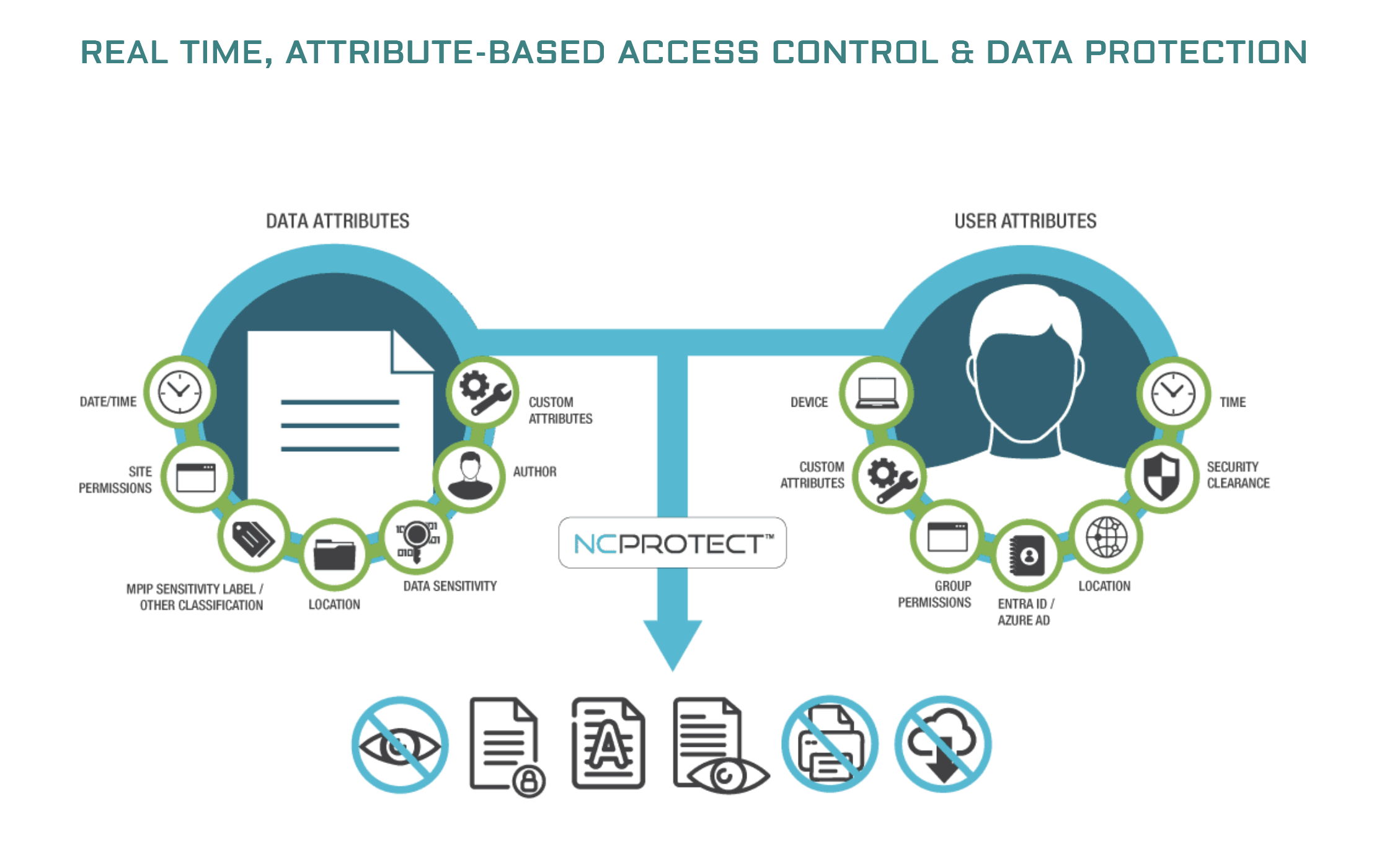
This means companies can control who can view, edit, download or share sensitive information in accordance with their organisational policies. It also helps reduce the risk of accidental data exposure and information misuse.
Complementing NC Protect is Kojensi, archTIS's secure file-sharing and collaboration platform, designed for organisations handling sensitive and classified information up to Top Secret levels.
The platform enables defence, intelligence and government organisations, as well as their industry partners, to securely access, store and exchange information.
By assessing attributes such as security classification, organisational affiliation and country reliability, Kojensi determines which users are authorised to access or interact with particular files. This is particularly important for defence and intelligence organisations, where information frequently needs to be shared between agencies and international partners.
A significant step in expanding these capabilities came in October 2025, when archTIS completed its acquisition of US-based data security provider Spirion.
Spirion's platform helps organisations identify where sensitive information is stored and what it contains. Its capabilities include scanning files, classifying and labelling information, and identifying potential exposure risks across connected systems, such as email.
Spirion gives archTIS a broader role in the data security process, helping organisations identify sensitive information before applying controls to protect it.
Just a few weeks ago, archTIS secured a A$119,000 contract with a Nasdaq-listed US regional bank for its Spirion Sensitive Data Platform, marking further expansion into the financial services sector beyond its traditional defence and government markets.
The agreement is archTIS’ second Spirion contract win in two weeks, bringing the combined value of the two deals to A$564,000.
The California-headquartered bank will deploy Spirion as part of an enterprise-wide data retention and lifecycle management program.
The platform will help the bank identify, classify and manage more than a decade of accumulated unstructured data, strengthening its ability to oversee sensitive information and meet regulatory requirements.
The latest contract highlights growing opportunities for archTIS to extend its data security capabilities into commercial markets, particularly financial services, where data governance, privacy and regulatory compliance remain key priorities.
Protecting sensitive data in the age of AI
As artificial intelligence becomes increasingly integrated into business operations, protecting the information these systems use is emerging as another major cybersecurity challenge.
Sensitive company information can be inadvertently exposed when employees use AI tools or when confidential data is incorporated into the datasets used to train or develop AI models. This is where Spirion AI Guardrails come in.
Spirion's sensitive data discovery and classification capabilities help to identify information that could pose a security or compliance risk before it is introduced into AI environments.
By helping organisations understand what their data contains and how it can be used, the technology aims to reduce the risk of confidential or regulated information being exposed through AI training or use.
archTIS received industry recognition for Spirion, with its Spirion Sensitive Data Platform AI Guardrails solution named Data Security Innovation of the Year at the 2026 CyberSecurity Breakthrough Awards
Taking data security to the global stage
America’s defence is constantly under cyber attack. This year alone, a breach of the Defence Manpower Data Centre’s information system exposed the personal information of more than three million people with ties to the US military. Unauthorised users accessed personal information such as unencrypted names, contact information, and dates of birth from October 2025 to July 2026.
This incident prompted two Marines to sue the Department of Defence (DoD) for failing to safeguard sensitive personal information and implement adequate cybersecurity controls.
To help potentially combat incidents like these, archTIS has been building its international presence through a series of defence and enterprise contracts across the US, UK and Japan.
This month archTIS secured a A$217,000 contract with a Nasdaq-listed US satellite communications and defence technology company.
The 12-month contract includes A$115,000 of software licences for Spirion Sensitive Data Manager (SDM) and archTIS Trusted Data Integration (TDI), plus A$102,000 for support and customer development services.
archTIS’ NC Protect technology is also set to be supplied to the US DoD, while negotiations continue over a broader enterprise licence.
The new contract, awarded through Copper River Technologies, is the second DoD-funded development agreement for NC Protect following a A$235,000 contract announced in October 2025 and completed in January 2026.
The company's partnership with Pexip provides solutions to address security requirements in multinational defence operations.
archTIS' Trusted Data Integration (TDI) technology and Pexip's secure video conferencing platform allow organisations to automatically control meeting access based on participants' security clearance, nationality and authorisation levels. The software also translates country-specific clearance codes into common classification standards, including TOP SECRET, SECRET, PROTECTED and OFFICIAL.
With pexip’s flexible deployment options, including on-premises infrastructure, sovereign cloud environments and hybrid systems, archTIS is helping organisations maintain control over sensitive communications.
To further expand the company's international reach, archTIS plans to extend Spirion across enterprise customers in North America, Europe and Asia-Pacific.
The next chapter for archTIS
archTIS’ opportunity lies in turning initial contracts into larger deployments, strengthening international customer relationships and commercialising its expanding product portfolio.
With the need to protect sensitive information unlikely to diminish, archTIS’ current growth trajectory and its contracts with defence departments put it in a good position to thwart the growing dangers of cyberattacks.


