

Namibia Critical Metals is seeking two of the most valuable heavy rare earth elements
Published: 08:00 19 Apr 2023 EDT
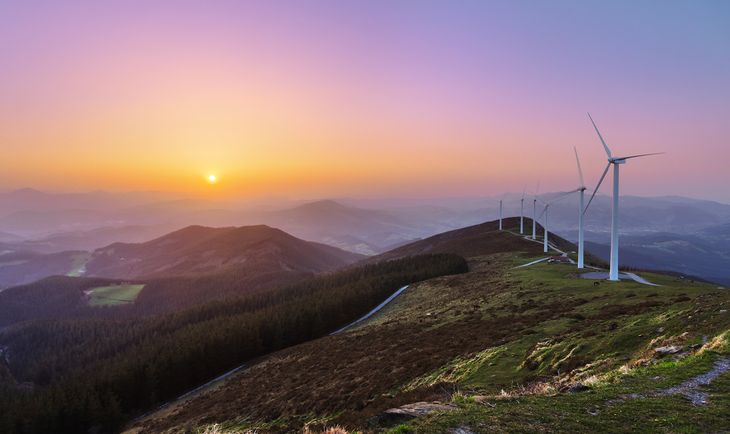
Rare earths have become critical metals over the past few years as they are widely used in permanent magnets for electric vehicles and in wind turbines, meaning demand has taken off as energy and technology transformations have increased.
China has had an overwhelming stranglehold on all facets of production and processing of rare earth oxides, but given fluctuations in the relationships of other G7 economies with the communist giant other sources of sustainable supply have been keenly sought, particularly by Japan which is actually the second largest consumer of rare earths outside of China
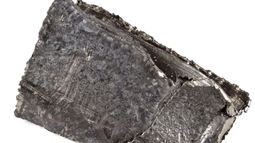
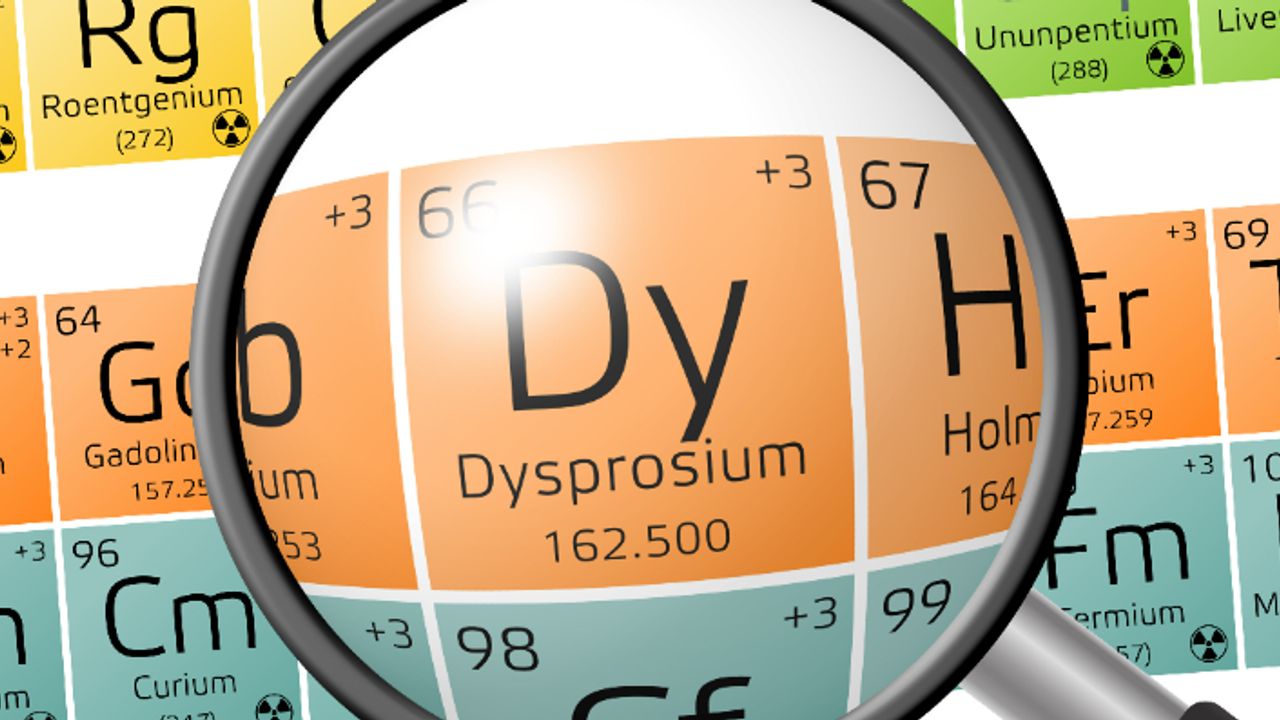
One company Japan has looked to in its search for supply is Canadian-listed Namibia Critical Metals Inc which is developing a Tier-1 Heavy Rare Earth Project at Lofdal in Namibia that has the potential for significant production of dysprosium and terbium, two of the most valuable heavy rare earth elements.
The company is aiming to become a long-term, sustainable supplier of heavy rare earths, and it is currently pursuing a pre-feasibility study (PFS) at Lofdal having started a final drill program at the end of January 2023 to increase the level of resource categories as required for the expanded project.
Proactive spoke to Darrin Campbell, Namibia Critical Metals president, to learn more about the company.
Proactive: Namibia Critical Metals is focused on the project at Lofdal, which has the potential for significant production of dysprosium and terbium. Could you let us know more about the project?
Darrin Campbell: Lofdal is located in central Namibia. We've been working on it since about 2011 and have now established it as being a globally significant deposit of the heavy rare earths, dysprosium and terbium, which are two of the critical metals used in the production of permanent magnets for EV motors, wind turbines, and other electronics. It is a very unique deposit, being one of only two xenotime-type deposits under development in the world that we're aware of, the other being Northern Minerals’ Browns Range deposit in Australia.
We put out our initial preliminary economic assessment (PEA) for Lofdal in 2014 and our first mineral resource in 2012, and a valid criticism against the project at that time was that it was just too small being only about a 6 million tonne resource with less than a seven-year mine life. However, with recent developments over the last two and a half years with our joint venture partners, we've completely dispelled those criticisms and have now established Lofdal as being one of the largest deposits of dysprosium and terbium anywhere in the world outside of China.
How did that change come about?
In 2020, we entered into a transformational transaction, securing a joint venture with JOGMEC, the Japan organization for metals and energy security, a Japanese government state agency. They have a multi-billion-dollar budget and a mandate to secure supply of natural resources for Japanese industry. About a decade ago, or more, JOGMEC did a joint venture with a very little-known light rare earth explorer out of Australia called Linus, which they have funded for over US$300 million to date, making Linus now one of the largest rare earth companies in the world. That was to secure supply of light rare earths for Japan, and they have now turned their attention to our Lofdal deposit to be a long-term supplier of the heavy rare earths, in particularly dysprosium and terbium, for Japan for the next decade or longer. And that's exactly what we're on track to accomplish.
The terms of our partnership with JOGMEC call for them to spend C$20 million in three different terms in order to earn a 50% interest and we just announced a few weeks ago that they will be completing term two of the three by next month. They have advanced additional funds to get them over the $10 million exploration requirement to reach their first 40% interest and we are now in the process of finalizing restructuring of our Namibian subsidiaries to accommodate their interest in the project going forward. We expect them to spend the final C$10 million for an additional 10% to get them the 50% agreed over the next two years.
So, we are really rapidly accelerating the project and what we've done with JOGMEC in the first two years has been really impressive. In 2020, we did a 16,000 meter drill program where we made a massive increase to the size of our resource, bringing it up from that 6 million tonnes initially to over 53 million tonnes Total Rare Earth Oxide (TREO). Our team has made the comment to me that they've cracked the geological code of this project, finally, and we believe there's still significant upside to grow this resource significantly further from the 53 million tonnes that we've already established.
In addition to geological success, we've had a great deal of processing success as well. We've worked over the last decade with all of the top consulting processors all over the world - in Australia, South Africa, Germany, Canada - and we believe we have also cracked the processing code because, particularly in a rare earth project, not only do you have to solve the geology, you also need to be able to solve how to economically process, which is very difficult and complex, and we believe we've done that too.
We just recently announced a pilot plant flotation and hydrometallurgical program with SGS Canada, our lead metallurgist consulting company that we've been working with for the last few years, and we've made a great deal of success in improving the economics of this project. And then all that work was compiled into an updated preliminary economic assessment that was released in November and we are currently now into a pre-feasibility study stage with the project.
Demand for these critical metals is driven by innovations linked to energy and technology transformations. Can demand increase significantly and in what areas?
Japan has been much further ahead of the curve than any other Western economies … But they have been held hostage - for lack of a better word - by China because of geopolitical issues over a decade ago. So, they made a move to reduce their reliance on China for their rare earth exports such as by doing the deal with Linus in Australia, as mentioned, and with others throughout the world, and now with us.
There are a number of professional forecasters and experts that have forecasted a significant growth curve for rare earths over the next decade. One that comes to mind is Adamas Intelligence, who are very active in the space and have projected a compound annual growth of almost 9% per year from 2022 to 2035 in rare earth prices. That is really driven by the mania over transitioning vehicle fleets from internal combustion engines to electric vehicles, as well as by increases in wind turbines. So, we're very bullish about the outlook for rare earth pricing and the demand for, in particular, heavy types such as dysprosium and terbium, which are truly the rarest of all other rare earth metals.
Aside from Lofdal, the company has three other projects at various stages of development, what is the status here?
Namibia is developing this fantastic gold district in central Namibia that is backstopped by in excess of 6 million ounces of gold under development. B2Gold has the Otjikoto mine and QKR Corp has the Navachab mine, and then there's another Canadian junior called Osino Resources which has 2 million-plus ounces at its discovery at Twin Hills.
We have three exciting early-stage projects in this belt, over a 2,000 square kilometer land package, and we are actively looking for a joint venture partner to come in and advance those projects a little further. Our focus right now is lasered in on moving Lofdal through feasibility, so we're looking to either divest or bring in a joint venture partner to advance those projects.
Namibia is described as “a proven and stable mining jurisdiction”, how easy is it to pursue business there?
In my opinion, Namibia is one of the best jurisdictions in all of Africa to work. We've been operating there since 2011 and we have an excellent relationship with all levels of government and the community in which we work. It is a very politically stable country, they have a very well-established set of rules, regulations, and laws, and are very mining friendly. There is a long, rich history of diversified mining in Namibia, and they have a very good mining culture and excellent infrastructure.
There's a Canadian organization called the Fraser Institute that puts out a global ranking of mining jurisdictions every year, and last year Namibia was ranked, I believe, number two in all of Africa. So, it's a fantastic jurisdiction to work in.
What do you feel you bring to the company as its president?
Well, I've been with the company now for six years, having joined initially as the CFO. My background is accounting and finance, and capital markets, and I have over 20 years’ experience working in the junior resource space. I have had the benefit of experiencing all three facets of mining, from early-stage exploration, to development and then also production, and that's not an easy transition for junior explorers to make.
It's the experience that I have in all three that counts as we are now in the position of transitioning from exploration to development, with the aspiration of moving into actual mining by the end of 2026. So, because of that experience, I've been able to keep the executive team fairly small and nimble and then, when appropriate, we will be growing and bringing in more expertise to help the team move the project to the next stage.
What should Namibia Critical Metals’ shareholders expect in the near to medium term?
I think over the next 12 months there are going to be a lot of catalysts for the project. We have started the pre-feasibility study, which we will deliver in early 2024. We are just wrapping up resource and infield drilling in the next two weeks at Lofdal, so we expect some good news to come out of that. We're also starting the pilot plant phase of flotation and hydrometallurgical work, which will be completed probably in Q3 into Q4 of this year.
In addition, our Japanese partner JOGMEC recently made a very important announcement that it is moving the project into what is called a public tender process to bring in a Japanese industrial partner to the joint venture at some point in the next year. We're really excited about that as it has the potential to rapidly accelerate us through feasibility and into production.
We also have really expanded, with our JOGMEC partners, on our ESG and corporate reach to the community in Namibia, which I am really proud of. For over a decade, we have been very active in our communities, sponsoring a local orphanage for the last 10 years, drilling water holes for farmers around our project, and, just recently, we started an Early Learners Assistance programme, sponsoring over 200 children in two grade schools in our area providing them with school uniforms and supplies for a year. That scheme was modelled after a community reach program instigated by our largest shareholder, an Australian-listed uranium developer in Namibia called Bannerman Energy.
Contact the author at jon.hopkins@proactiveinvestors.com