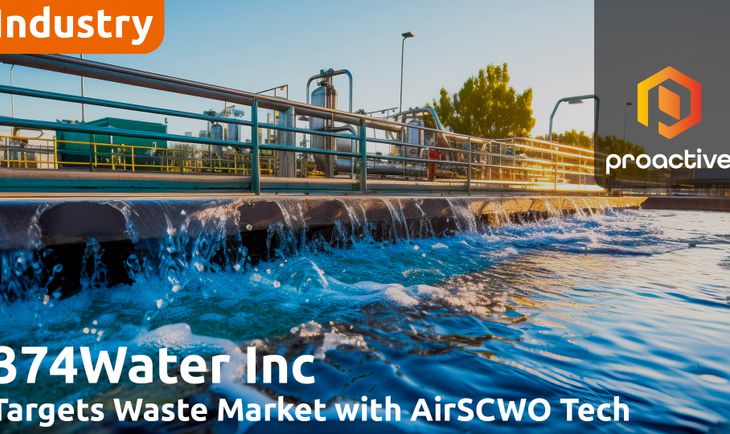


With Federal PFAS deadlines extended, 374Water battles toxic “forever chemicals”
Last updated: 11:15 11 Aug 2025 EDT, First published: 11:05 11 Aug 2025 EDT
A growing number of water systems across the US are contaminated with PFAS, a group of thousands of synthetic chemicals that persist in the environment and are linked to cancer and other health problems. As federal regulations tighten, utilities and industrial players are under pressure to do more than just contain these compounds. They need to destroy them.
That’s left governments, cities, and businesses searching for better ways to deal with the problem.
After setting landmark drinking water limits on PFAS in 2024, the US Environmental Protection Agency in May 2025 delayed implementation of those rules, extending the compliance deadline for utilities by two years to 2031 and announcing plans to revise or rescind limits on four of the six regulated PFAS compounds. The move, framed by the agency as part of a legally required review, drew praise from water utilities concerned about cost but criticism from health advocates who warned it would slow protections for millions exposed to the toxic chemicals.
In response, states like Delaware moved to enact their own safeguards, advancing legislation to enforce PFAS testing and reduction by 2029, while Washington state proposed broader restrictions on PFAS in consumer products. The regulatory shift has added uncertainty for municipalities and manufacturers already navigating mounting litigation and public pressure around the widespread contamination from so-called "forever chemicals."
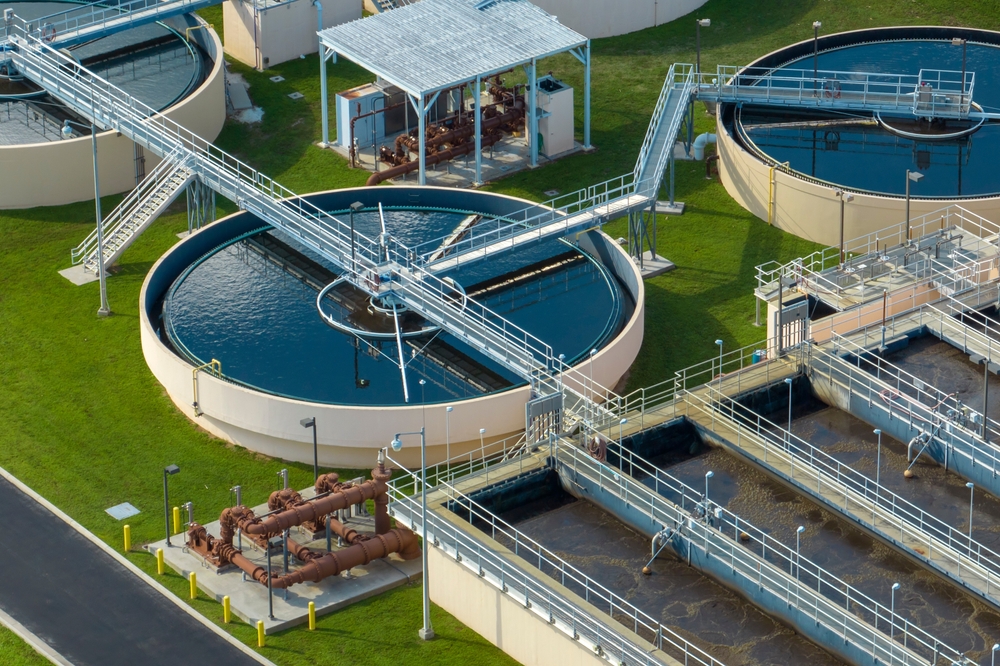
North Carolina-based 374Water Inc (NASDAQ:SCWO) has a solution. The Nasdaq-listed company developed a system called AirSCWO, which uses high temperature and pressure to create a chemical environment that breaks down waste, including PFAS, at the molecular level. The company is scaling the solution to a 30-ton capacity.
The system is unique in operating as a continuous-flow process, unlike batch processes that treat waste in cycles. AirSCWO feeds waste into the system, CEO Chris Gannon explained. “Think about all of the wastewater treatment facilities, all of the landfills, all of the toxic materials that are thrown in our oceans and everywhere else. Lots of that is organic,” Gannon said. “We have a means, through our technology, to destroy that.”
The company’s technology emerged from research by its founder, Dr Mark Deshusses, a Duke University professor. Early funding from the Bill and Melinda Gates Foundation supported initial work focused on water sanitation in emerging markets. That research evolved into the AirSCWO system, which Gannon describes as one of the most effective ways to destroy organic waste, including problematic compounds like PFAS, pharmaceuticals, pesticides, and microplastics. “We are one of the first that has actually taken all of that research, and created a technology that does exactly what everybody was trying to do for 40 years – literally destroying the organic waste,” Gannon said.
The system works by creating a supercritical water environment – water heated and pressurized beyond its critical point – that, combined with oxygen, creates a highly reactive setting to essentially rip apart organic contaminants at the molecular level.
374Water currently offers two commercial models: the AS1, which processes one ton of waste per day, and the AS6, which handles six tons per day. The company is developing the AS30, a 30-ton capacity system slated for manufacturing this year with deployment next year. The long-term goal is a 100-ton system capable of serving large metropolitan areas.
The company is currently running a 90-day demonstration project with the city of Orlando. Meanwhile, an AS6 system is undergoing testing before installation at the Orange County Sanitation District in California.
Demand is growing rapidly, according to the CEO. “We have a very large municipal pipeline. In fact, we’re having to hold off some of the interest just to focus on completing our current projects,” Gannon said. “I’d say there are a lot of municipalities that are chomping at the bit. But they’re also closely watching what’s happening in Orlando and Orange County.
“Once those projects are completed and validated, we expect a wave of demand as cities start saying, ‘Let’s go.’”
Beyond municipalities, 374Water is pursuing federal contracts, particularly with the military. The company is close to securing authorization as a direct vendor for government contracts after extensive testing. But a critical part of expanding federal business depends on operating at facilities with Resource Conservation and Recovery Act (RCRA)-permitted treatment, storage, and disposal facilities (TSDF). These sites allow handling hazardous and non-hazardous waste streams under strict regulations.
374Water is negotiating agreements with existing operators, including Crystal Clean, which handles industrial and government waste. The company plans to build its waste destruction operations within these facilities, leveraging their permits and infrastructure.
The RCRA TSDF sites hold permits that allow them to handle both hazardous and non-hazardous waste, Gannon said. “We already know our technology can process a wide variety of waste streams, but we still need to prove our capabilities on some of the more difficult, highly hazardous waste types. To do that, we need access to these permitted facilities.”
Ultimately, Gannon said the firm is planning to scale up to full hazardous waste processing. The company said it takes at least 12 months to bring a hazardous waste processing project fully online, a timeline closely-tied to permitting processes. When achieved, processing hazardous waste offers significantly higher revenue potential. “When that happens, the per-gallon revenue increases dramatically – multiple times higher than what we get for non-hazardous waste,” Gannon said.
As regulators clamp down on PFAS pollution, companies that offer total destruction rather than simple containment could gain a critical edge. For 374Water and its peers, the race is on to turn environmental urgency into commercial viability.