


Drones in food delivery: Fantasy, fad or the next big margin lever?
Last updated: 07:15 20 May 2025 EDT, First published: 07:05 20 May 2025 EDT
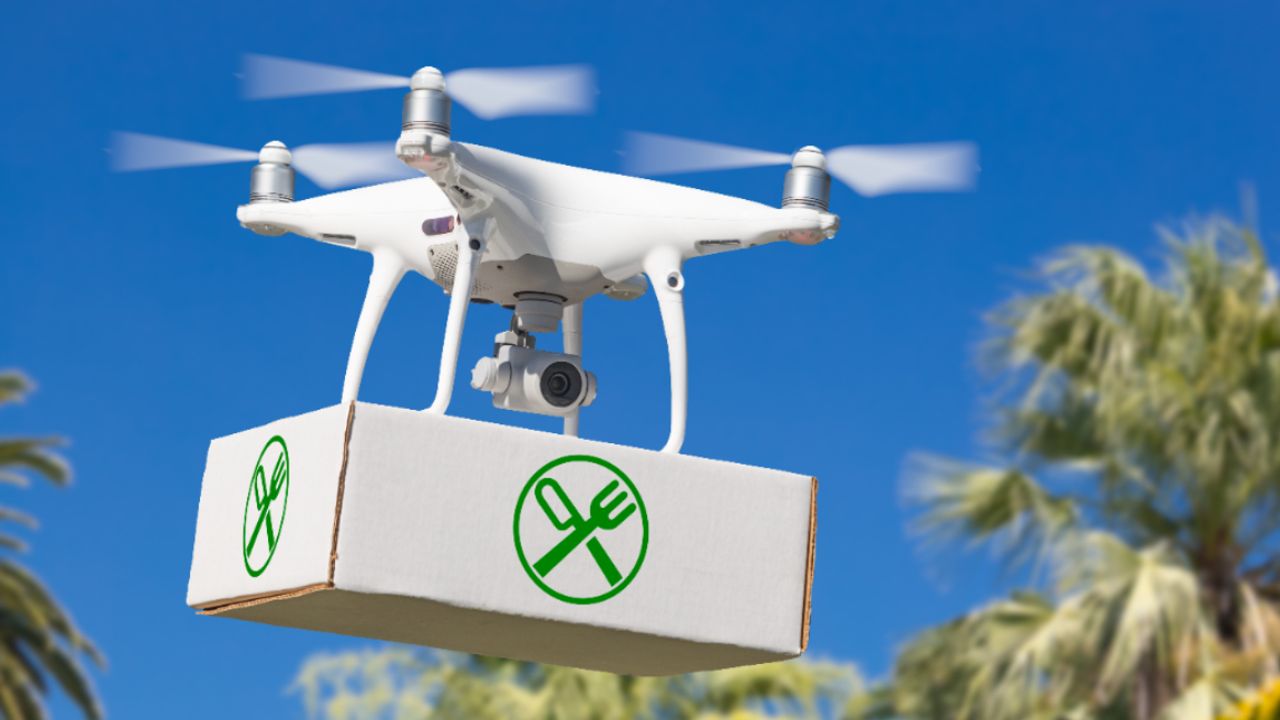
A few years ago, the sight of a burrito descending from the sky would have seemed like a tech demo gimmick. Today, it is edging closer to a logistical reality and the investment case is starting to shift accordingly.
According to JP Morgan’s latest research note on drone deliveries, around 5 million drone-based orders were completed globally in 2024. Now, that is roughly 14,000 every day.
Still a speck in the sky compared to the wider delivery industry, but meaningful enough to be taken seriously by analysts tracking the likes of Delivery Hero and DHL.
The technology remains nascent, limited in reach, and often hemmed in by regulation. But what was once the stuff of future gazing is now quietly landing on rooftops across China, Australia and parts of the Middle East.
Even Europe, historically cautious in aviation regulation, is starting to embrace trial programmes.
Why drones could move the dial
For food delivery groups, the promise is twofold: cost efficiency and market expansion. Labour makes up a significant chunk of the cost base in markets such as Germany, France and the UK, where wages are high and regulation relatively strict. Replace a rider with a rotor, and the economics change. JP Morgan suggests that in a “blue sky” scenario, drone delivery could boost Delivery Hero’s earnings before interest, tax, depreciation and amortisation by €160 million by 2028 or around €7 per share.
Just as importantly, drones offer access to places traditional fleets cannot easily reach.
Think rural zones where it makes no economic sense to deploy a moped driver, or traffic-heavy city centres where a five-minute journey can take twenty. In short, the technology could stretch the total addressable market, a key investor metric, for food platforms that have long since saturated urban cores.
But the adoption curve is not just a question of cost. It is also about control.
Current regulations in many markets require a human pilot to monitor drone flights, reducing the cost advantage and limiting scalability. Here, regional differences matter. China and Australia are well ahead in regulatory flexibility, while Europe is making slower, more deliberate progress.
The logistics story is different but not dull
For logistics operators like DHL, the play is not meal delivery but high-value, low-weight shipments and operational efficiency. JP Morgan notes that DHL is already deploying drones in China and running tests in Germany.
Current use cases include inventory management, last-mile parcels in remote areas and facility surveillance.
The near-term earnings impact may be limited, but the long-term strategic value could be significant. Automated aerial routes for medical supplies, spare parts or time-sensitive documents have a clear rationale.
And in an industry defined by scale and margin management, even a 1% efficiency gain can move the needle.
What investors should watch
For now, drones are unlikely to transform the profit and loss statements of delivery platforms. The impact remains theoretical, the infrastructure patchy and the regulatory terrain uneven.
But momentum is building. The combination of labour cost pressures, advances in battery and navigation technology and a renewed regulatory push means drone delivery is no longer a moonshot. It is a slow, cautious descent towards viability.
As JP Morgan’s analysts suggest, investors do not need to price in drone delivery as a base case. But they would be wise to view it as a credible optionality layer and one that may become visible and investable sooner than expected.